Introduction
Building a successful eCommerce store starts with choosing the platform that supports your business goals. When businesses begin developing eCommerce solutions, one comparison appears frequently in discussion and research: Shopify vs Magento. Both platforms power thousands of online stores, yet they serve very different types of businesses.
Shopify is commonly known for its simplicity and managed environment that allows store owners to focus on selling rather than handling technical setup. Mangeto, recognised today through Adobe Commerce, is built for eCommerce development that requires deeper control, extensive customisation, and the flexibility to shape the shopping experience.
Understanding the difference between Magento and Shopify is important before committing to a platform. Each option offers a unique advantage depending on your technical resources, budget, and long-term growth strategy.
In this guide, we will compare Magento and Shopify across key factors such as features, pricing, usability, and scalability to help you decide which is better Magento or Shopify for your eCommerce business.
Magento vs Shopify at a Quick Glance
When businesses begin comparing Magento vs Shopify, they often want a quick overview before reviewing detailed features. Both platforms support an eCommerce store, product management, payment processing, and marketing tools. Yet their approach to store management and technical control differs significantly.
Shopify works as a hosted eCommerce solution that manages hosting, security, and updates for you. Magento operates as an open source platform that gives businesses deeper control over customisation and infrastructure.
Quick Comparison Table of Magento and Shopify
| Feature | Shopify | Magento |
| Platform Type | Fully hosted eCommerce platform. | Open-source eCommerce platform. |
| Setup Process | Quick setup with minimal technical knowledge. | Requires development setup. |
| Hosting | Include within the platform. | Requires external hosting. |
| Customisation | Moderate customisation through apps and themes. | Extensive customisation through development. |
| Ease of Use | User-friendly interface. | Requires technical expertise. |
| Pricing Model | Monthly subscription plans. | Development, hosting, and maintenance costs. |
| Scalability | Suitable for small to large stores. | Suitable for large and enterprise stores. |
| Security | Managed by Shopify. | Managed by the store owner or development team. |
Key Difference Between Magento and Shopify
The primary difference between Magento and Shopify lies in how much control a business needs over the eCommerce environment.
Shopify provides an all-in-one platform where most technical tasks are handled automatically. This allows businesses to focus on managing products, orders, and customers.
Magento offers greater flexibility and customisation. Businesses can modify store functionality, integrate complex systems, and control hosting environments. This level of flexibility often requires Magento development expertise and ongoing technical management.

What is Shopify?
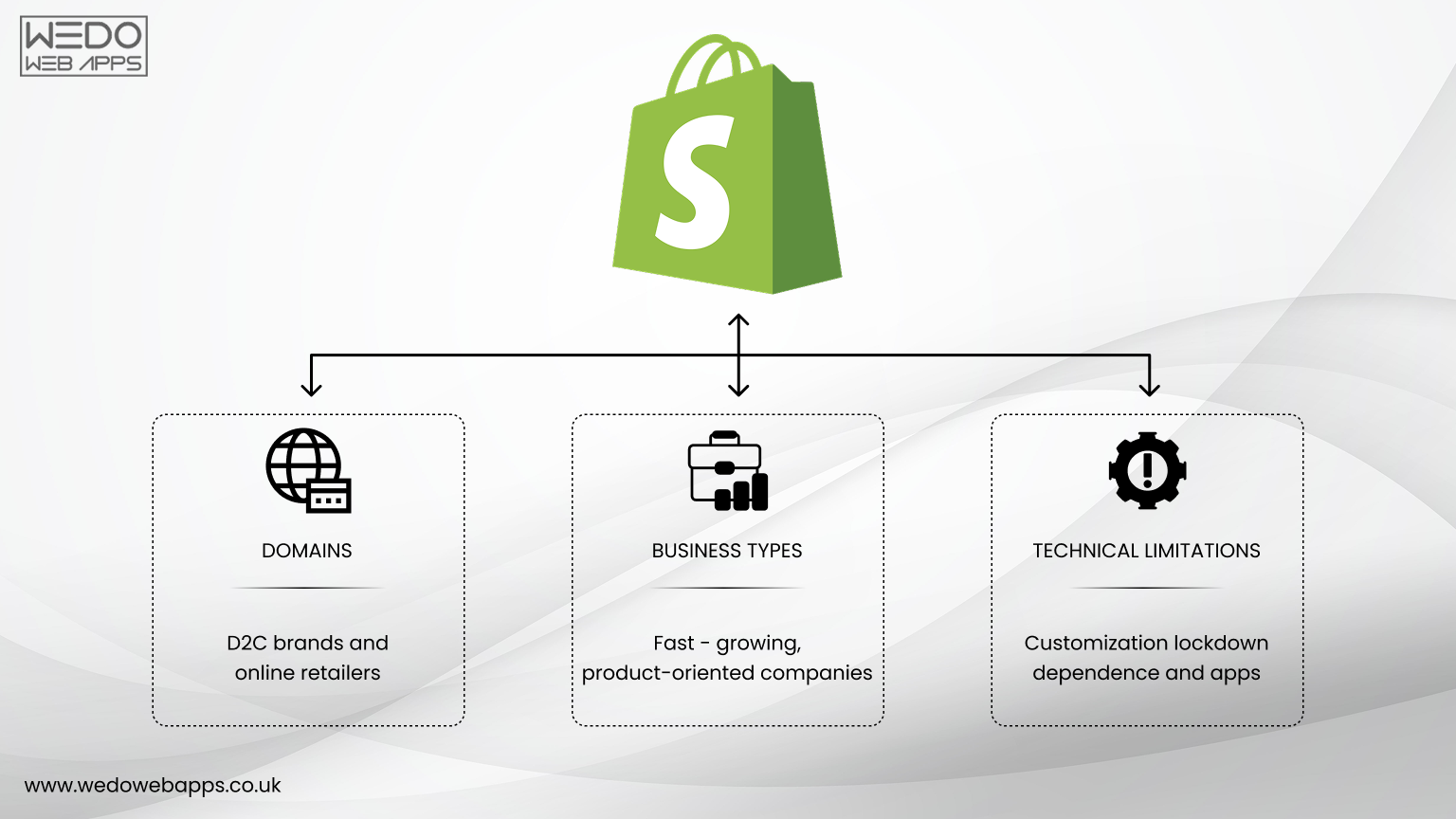
Shopify is a hosted eCommerce platform that allows businesses to create, manage, and grow online stores without handling technical infrastructure. This platform manages the hosting, security updates, and system maintenance. This setup allows store owners to focus on arranging products, customers, and sales operations.
Shopify operates through a subscription-based model where businesses can set up a store, choose a theme, add products, and begin selling through a web interface. Many of the businesses choose Shopify as it is a simplified platform that allows to manage stores while providing easy access to integrations, payment gateways, and marketing tools.
How Shopify Works for eCommerce Businesses
Shopify provides a centralised dashboard where merchants manage products, orders, inventory, and customer information. The platform includes built-in tools for payments, shipping configuration, tax calculation, and store analytics.
Businesses can also connect their store with third-party applications for marketing automation, accounting, inventory management, and customer engagement. This allows companies to expand store capabilities without developing custom solutions.
Core Features of Shopify
Shopify provides several features designed to simplify eCommerce operations.
- Ready-to-use storefront themes.
- Built-in payment processing options.
- Mobile responsive checkout experience.
- Inventory and order management tools.
- Marketing integrations and analytics reports.
- Access to a large app marketplace.
These features help businesses launch and operate an online store when developed with the help of a Shopify development company, requiring minimal technical setup needed.
Advantages of Using Shopify
Shopify offers several benefits for businesses that want a straightforward eCommerce solution.
- Simple setup and user-friendly interface.
- The platform handles hosting and security.
- Large ecosystem of apps and integrations.
- Reliable performance and global infrastructure.
- Continuous platform updates and feature improvements.
Because of this managed environment, Shopify is often preferred by small to medium-sized eCommerce businesses.
Limitations of Shopify
While Shopify keeps offering convenience, it also has some limitations.
- Customisation may require apps or advanced plans.
- A transaction fee can apply depending on the payment methods.
- Deep backend control is more limited compared with open-source platforms.
Businesses that require complete control over the infrastructure or advanced customisation sometimes consider other platforms when comparing Magento and Shopify.
What is Magento?
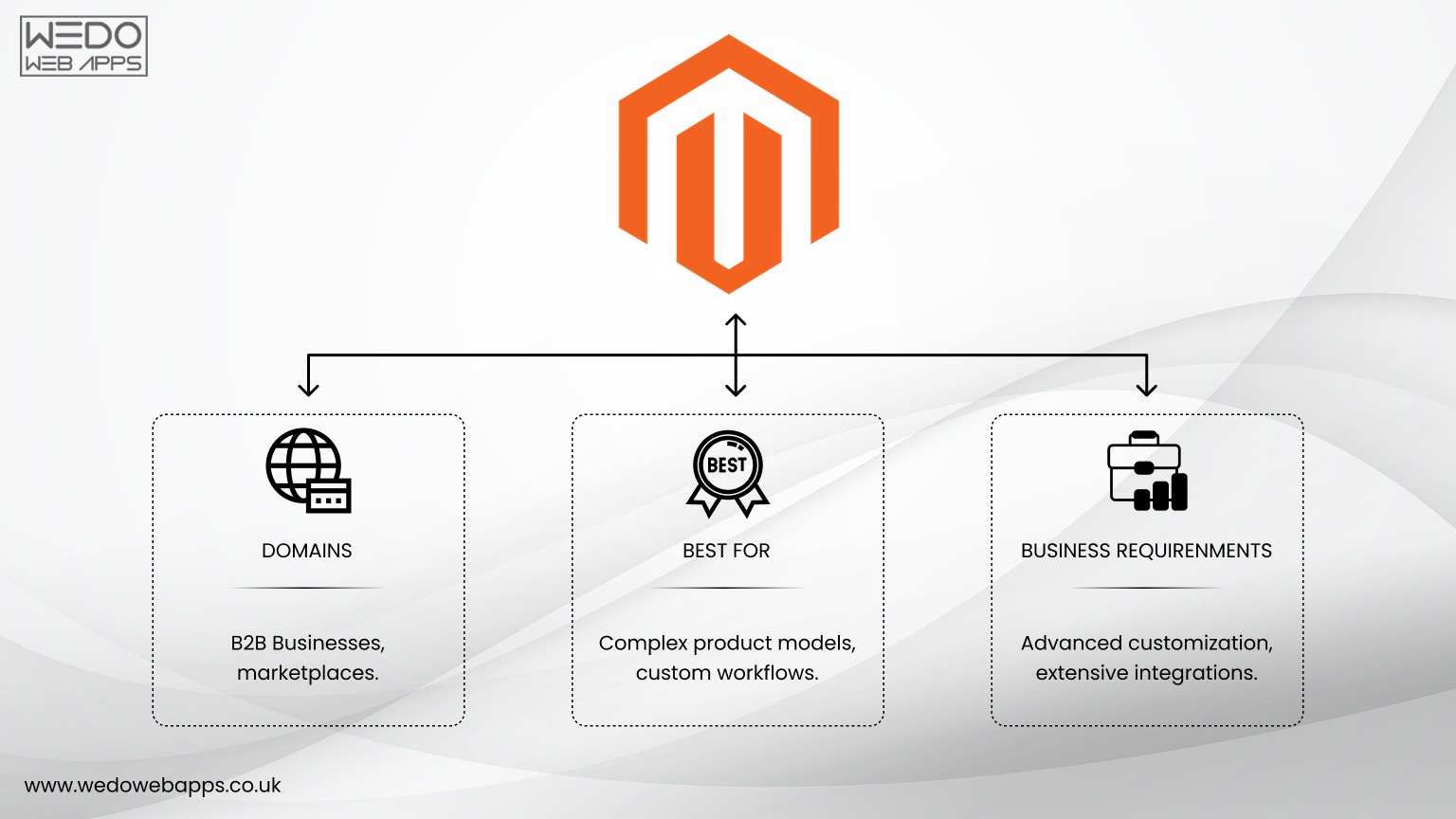
Magento is now part of Adobe through Adobe Commerce. It is an open-source eCommerce platform that is specifically designed for businesses that require a high level of customisation and control. It allows developers to modify nearly every aspect of an online store, from design and functionality to integrations and infrastructure.
Magento gives businesses the flexibility to build complex eCommerce systems. Many large retailers and enterprise-level companies prefer Magento because it supports advanced product catalogs, multiple store management, and custom workflows.
How Magento Works for eCommerce Stores
Magento operates differently from hosted platforms. Businesses need to arrange hosting, configure the system, and manage updates with the help of Magento development services. This setup usually involves developer or technical teams who can build and maintain the store environment.
Once the store is configured, Magento provides a powerful backend where businesses can manage products, orders, inventory, and customer data. The platform also supports extensive customisation through extensive and custom development.
Core Features of Magento
Magento provides a wide range of features that support large and complex eCommerce operations.
- Advanced product catalog management.
- Multi-store and multi-language support.
- Flexible checkout and payment configuration.
- Customisable storefront and backend architecture.
- Extensive extension marketplace.
- Strong support for B2B eCommerce operations.
These capabilities allow businesses to build highly tailored eCommerce experiences.
Advantages of Using Magento
Magento offers several benefits for businesses that need flexibility and control.
- Full access to the platform for customisation.
- Ability to manage multiple stores from one system.
- Suitable for complex product catalogs.
- Strong scalability for large eCommerce operations.
- Wide developer community and extension ecosystem.
Because of this flexibility, Magento is often considered by businesses that need advanced eCommerce functionality.
Limitations of Magento
Magento also requires greater technical involvement compared with other hosted platforms.
- Setup and development require technical expertise.
- Hosting and infrastructure must be managed separately.
- Development and maintenance costs can be higher.
- Store performance depends on hosting and configurations.
For this reason, businesses often compare Shopify vs Magento to determine whether they prefer a managed eCommerce platform or a customisable system with deeper technical control.
Difference Between Magento and Shopify
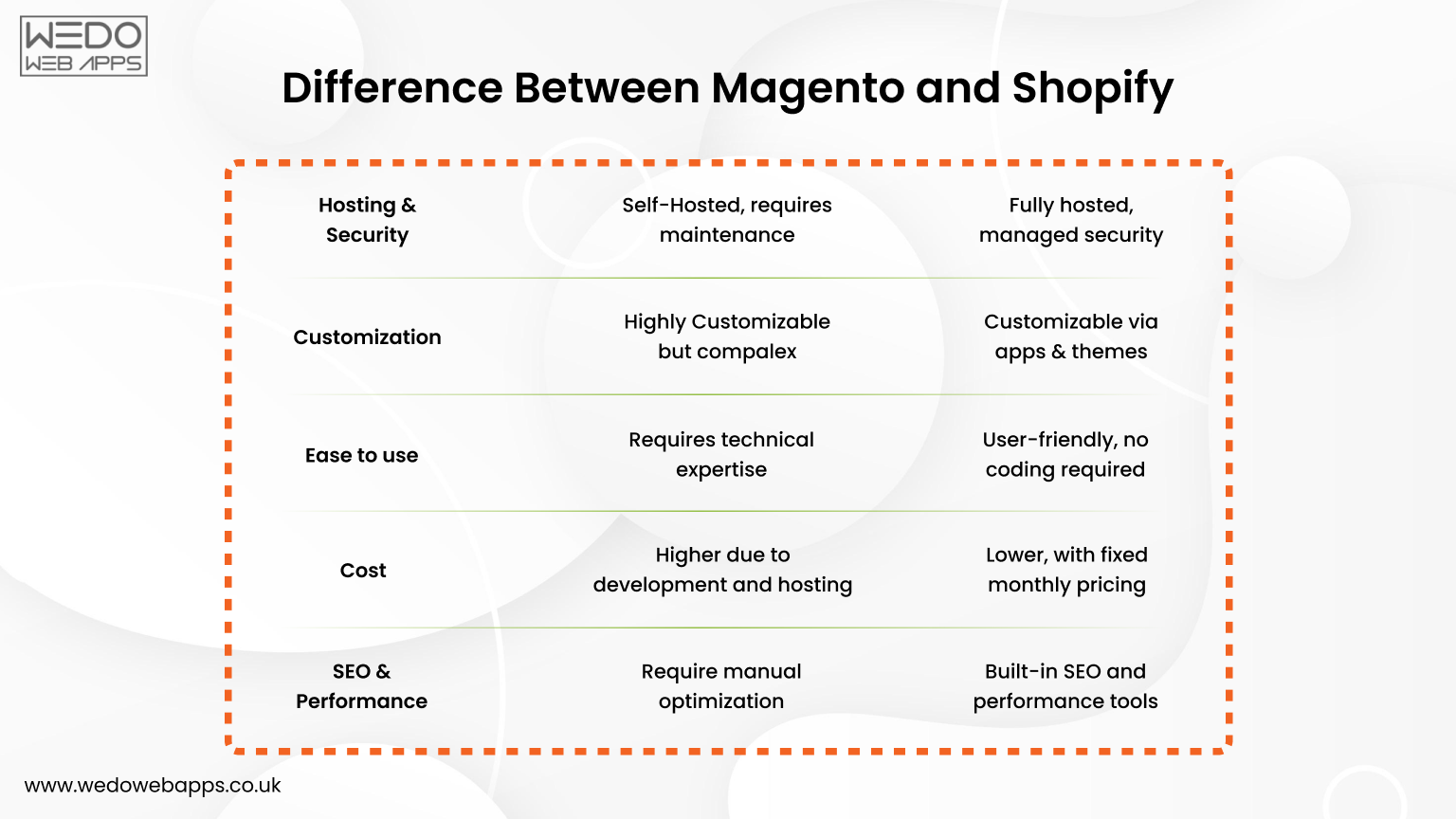
When businesses compare Magento and Shopify, the difference becomes clear in how each platform is structured and managed. Both platforms support online stores, product catalogs, and even secure payment processes.
Understanding the difference between Magento and Shopify helps businesses select the platform that matches their technical capabilities and operational goals.
Here are some of the factors that allow you to know the difference between Magento and Shopify:
Platform Structure and Hosting
One of the first differences that appears is how the platforms are being hosted and maintained.
Shopify operates as a fully hosted platform. The company manages hosting, security updates, and system performance. Store owners can focus on managing products and orders instead of the system environment.
Key points to consider include:
- Shopify includes hosting and infrastructure within its platform.
- Magento requires external hosting and server configuration.
- Shopify manages security updates automatically.
- Magento security and maintenance depend on the development team.
Ease of Setup and Technical Requirements
The setup process also highlights the difference between the two platforms.
Shopify is designed for simplicity. Businesses that want to set up a store quickly can select a theme, add products, and configure the payments. The platform interface allows most of the tasks to be handled without development support.
Magento requires a more technical setup. Installation, configuration, and customisation usually require the help of a Magento developer.
Important considerations include:
- Shopify offers a faster store launch process.
- Magento setup requires technical knowledge.
- Shopify allows store management through an intuitive dashboard.
- Magento often needs development resources for customisation.
Customisation and Development Flexibility
Customisation is another area where the platform differs significantly.
Magento allows businesses to modify the platform code and create a tailored eCommerce experience. This flexibility makes it suitable for complex stores or businesses that require advanced integrations.
Shopify also supports customisation through themes and applications, but deep backend modifications are more limited.
Some notable differences include:
- Magento allows an extensive level of code customisation.
- Shopify customisation is handled with apps and themes.
- Magento supports complex integrations and workflows.
- Shopify focuses on simpler configuration and app-based features.
Maintenance and Store Management
The responsibility for maintaining the platform also differs.
Shopify manages the system updates, hosting performances, and security patches as part of its service. This reduces the technical workload for store owners.
Magento requires ongoing maintenance from developers or the technical team to ensure that the system's performance and security are maintained.
Key aspects include:
- Shopify manages updates and infrastructure automatically.
- Magento requires manual updates and maintenance.
- Shopify reduces the need for technical management.
- Magento provides greater control but requires ongoing support.
Because of these discussed factors, businesses evaluating Magento or Shopify often consider their technical resources, customisation needs, and long-term eCommerce strategy before choosing the platform.

Shopify vs Magento: Feature Comparison
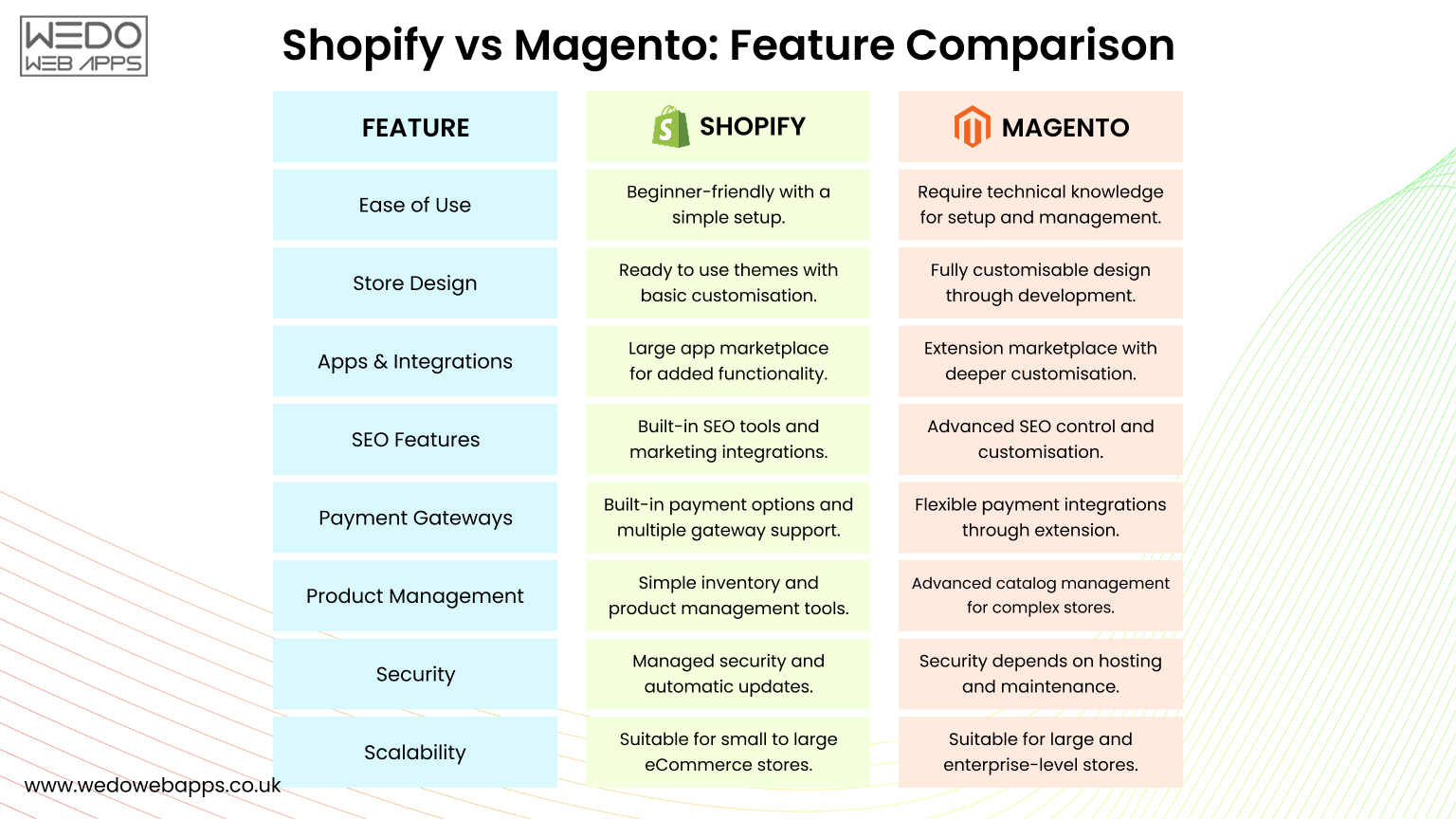
When considering Shopify vs Magento, feature comparison becomes an important step in the decision process. Both platforms provide the tools for managing products, processing orders, and supporting online sales. The difference appears in how these features are delivered and how much control businesses have over them.
The table highlights the core difference between Magento and Shopify. Shopify development agencies focus on simplicity and managed infrastructure, while Magento provides the flexibility for businesses that require deeper customisation.
Now, let us just have a closer look at both the platforms compared across key eCommerce features.
Ease of Use and Store Setup
Ease of use often determines how quickly businesses can launch an online store.
Shopify simplifies the setup process. Store owners can create a store, add products, and begin selling with minimal technical knowledge.
Magento requires a more technical setup process.
Key points include:
- Shopify gives a beginner-friendly interface.
- Magento setup usually requires development expertise.
- Shopify allows for faster store launch.
- Magento provides deeper control for experienced teams.
Design Options and Themes
Store design influences brand identity and user experience.
Shopify provides a marketplace of ready-to-use themes. It also customises the design through theme settings and applications.
Magento supports deeper design customisation through smart development.
Important design differences include:
- Shopify provides ready-to-use storefront themes.
- Magento allows for complete design customisation.
- Shopify design updates are managed through theme settings.
- Magento enables tailored storefront development.
Apps, Extensions, and Integrations
Modern eCommerce stores rely on integrations to expand functionality.
Shopify offers a large app marketplace where businesses can install tools for marketing and inventory management.
On the other hand, Magento provides extensions and custom integrations.
Key considerations include:
- Shopify apps enable quick feature additions.
- Magento extensions support advanced functionality.
- Shopify integrations require minimal technical setup.
- Magento integration may involve development work.
SEO and Marketing Features
Search visibility is essential for attracting online customers.
Shopify includes built-in SEO settings and marketing integrations that help merchants manage search performance.
Magento provides deeper control over technical SEO elements.
SEO-related highlights include:
- Shopify includes built-in SEO tools.
- Magento supports advanced SEO customisation.
- Shopify integrates easily with marketing platforms.
- Magento allows deeper technical configuration.
Payment Gateways and Checkout Experience
Payment flexibility influences the checkout experience.
Shopify includes integrated payment processing along with support for several third-party gateways.
While Magento has multiple payment gateways, but they often require additional setup.
Key points include:
- Shopify includes built-in payment processing.
- Magento allows custom payment integrations.
- Shopify checkout is optimised within the platform.
- Magento checkout customisation depends on development.
Inventory and Product Management
Product organisation is one of the important factors for handling eCommerce operations.
Shopify offers a simple interface for managing inventory, products, and orders.
Magento provides advanced catalog management suitable for businesses with large inventories.
Important aspects include:
- Shopify simplifies product management.
- Magento supports complex product catalogs.
- Shopify works well for standard eCommerce stores.
- Magento handles detailed inventory structures.
Security and Data Protection
Security protects customer data and payment information.
Shopify manages security updates and infrastructure protection as part of the platform.
Magento security depends on hosting configuration and ongoing maintenance.
Security considerations include:
- Shopify includes managed security and updates.
- Magento security depends on hosting setup.
- Shopify reduces technical responsibility.
- Magento allows full control over security management.
Performance and Scalability
Store performance directly gives the impact on the customer experience.
Shopify uses a managed infrastructure designed to maintain stable performance as stores grow.
Magento performance depends on the quality of hosting and system optimisation.
Key performance points include:
- Shopify provides access to managed infrastructure.
- Magento performance depends on the hosting infrastructure.
- Shopify supports growing eCommerce stores.
- Magneto can support large enterprise operations.
By knowing about the features when comparing Shopify vs Magento, businesses can make better decisions about which of their eCommerce stores is suitable as per the objective.
Magento vs Shopify Pricing Comparison
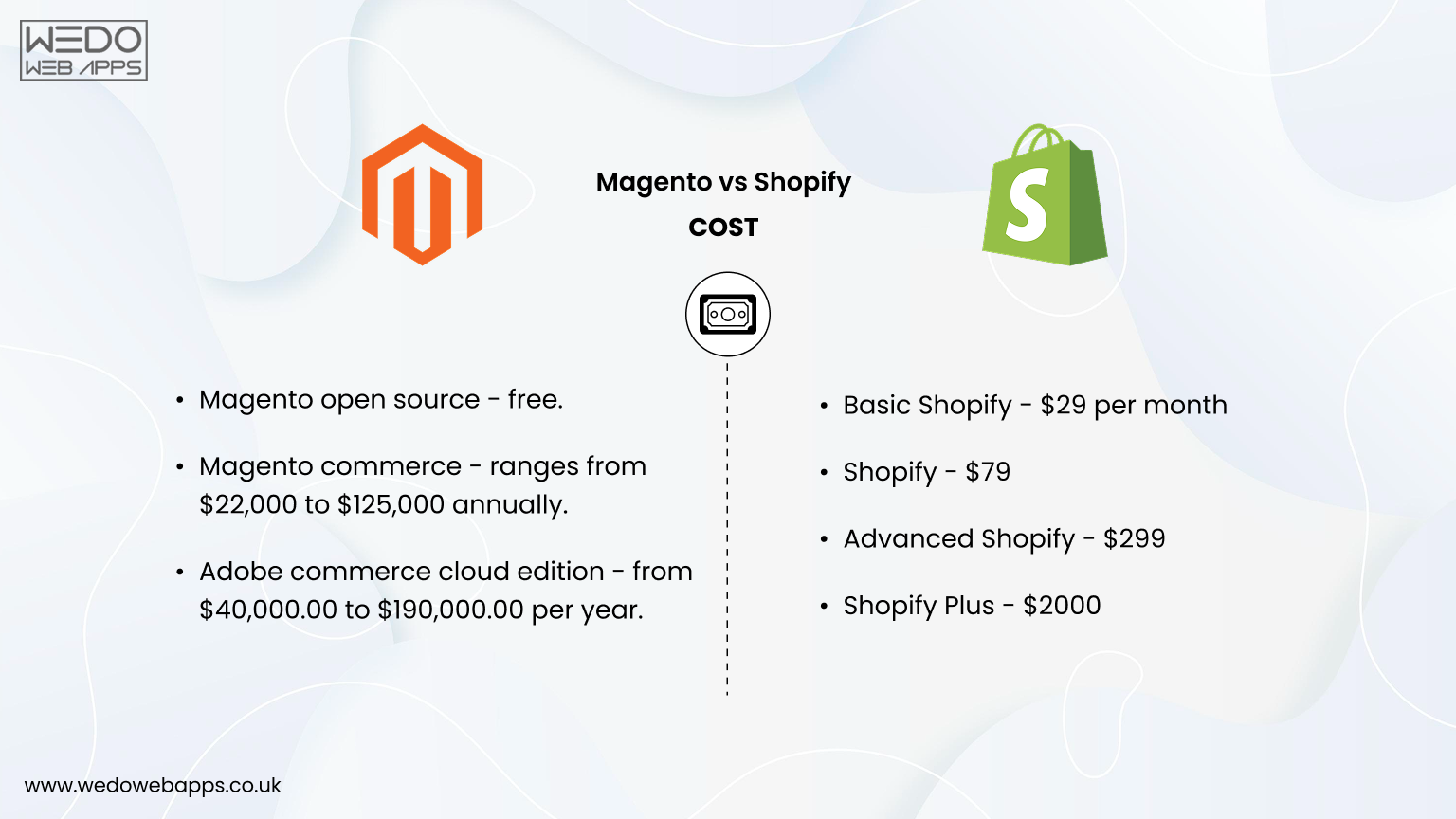
Pricing is one of the important factors when it comes to knowing about Magento vs Shopify. Both platforms support an eCommerce store, but their pricing structures are very different.
Shopify follows a subscription model with a predictable monthly cost. Magento provides an open-source framework where costs depend on hosting, development, and maintenance.
Understanding these cost differences helps businesses estimate the overall investment required to run an online store smoothly.
| Cost Factor | Shopify | Magento |
| Platform Cost | Monthly subscription plans. | An open-source version is available without a license cost. |
| Hosting | Included in the platform. | Must be purchased separately. |
| Setup Cost | Low setup cost. | Development setup required. |
| Themes and Design | Free and paid themes available. | Custom design often requires development. |
| Extension and Apps | Paid and free apps through the Shopify App Store. | Extensions available through Magento marketplace. |
| Maintenance | Managed byShopify. | Require technical maintenance. |
| Total Cost | Predictable monthly expenses. | Cost varies as per development and hosting. |
The table above highlights the primary difference between Magento and Shopify in terms of cost structure. Shopify bundles several operational services within the subscription, while Magento requires businesses to arrange and manage multiple components separately.
Shopify Pricing Structure
Shopify offers several subscription plans that allow businesses to choose a package based on the store's size and operational needs. The platform includes hosting, security updates, and basic eCommerce tools within the monthly fee.
Typical expenses associated with Shopify include:
- Monthly subscription plan based on requirements.
- Premium themes for advanced store design.
- Paid application for additional functionality.
- Transaction fees depend on the selected payment gateways.
This structure makes Shopify easier to budget because most core services are already included.
Magento Development and Hosting Costs
Magento follows a different pricing approach because it is an open-source platform. While the core software can be downloaded without licensing fees, businesses must invest in infrastructure and development resources.
Common costs associated with Magento include:
- Web hosting and server infrastructure.
- Development and customisation expenses.
- Extensions and integration costs.
- Ongoing maintenance and system updates.
These costs can vary depending on store complexity and the level of customisation required.
Total Cost of Ownership Comparison
When businesses compare Magento and Shopify, the total cost of ownership provides a clearer picture of long-term expenses.
Key pricing considerations include:
- Shopify offers predictable monthly pricing.
- Magento requires investment in hosting and development.
- Shopify reduces the chances of technical maintenance needs.
- Magento allows deeper customisation but often increases operational costs.
Because of these differences, businesses deciding between Magento or Shopify often evaluate their technical resources, budget flexibility, and long-term eCommerce strategy before choosing a platform.

Magento and Shopify Pros and Cons
When businesses compare Magento and Shopify, the advantages and limitations of each platform must be clear. This will help businesses to have clarity about what the first eCommerce store's goals are. Both platforms offer strong capabilities for building online stores, yet they are designed for different levels of technical involvement and customisation.
Understanding the strengths and limitations of each platform helps businesses make a more informed decision.
Shopify Pros and Cons
Shopify is widely recognised for its ease of use and managed infrastructure. The platform allows businesses to launch and manage online stores without handling complex technical tasks.
Advantages of Shopify
- Simple setup and user-friendly interface.
- Hosting and security are managed by the platform.
- Large ecosystem of apps and integrations.
- Reliable performance with built-in infrastructure.
- Continuous platform updates and improvements.
Limitations of Shopify
- Customisation options can be limited compared with open-source platforms.
- Some advanced features require paid apps.
- Transaction fees may apply depending on the payment gateways.
These factors make Shopify suitable for businesses that want a straightforward eCommerce platform with minimal technical involvement.
Magento Pros and Cons
Magento is a platform offered as Adobe Commerce. It is known for its flexibility and customisation capabilities. Many large eCommerce businesses prefer Magento because it allows deeper control over store functionality and infrastructure.
Advantages of Magento
- Extensive customisation through the open-source architecture.
- Ability to manage complex product catalogs.
- Strong scalability for large eCommerce operations.
- Flexible integrations with enterprise systems.
- Control over hosting and infrastructure.
Limitations of Magento
- Require technical expertise for setup and maintenance.
- Higher development and infrastructure costs.
- Store performance depends on the hosting configuration.
Because of these differences, businesses often compare Shopify vs Magento as per their technical resources, customisation needs, and operational complexity before selecting the platform that fits with the eCommerce strategy.
Magento or Shopify: Which Platform Should You Choose?
After reviewing the features, pricing, and flexibility of both platforms, many businesses still ask the same question: Magento or Shopify, which platform is the better choice? The answer depends largely on your business requirements, technical resources, and long-term eCommerce strategy.
Both platforms support online selling, yet they are built for different operational needs. Shopify focuses on simplicity and managed infrastructure, while Magento provides greater control and customisation for complex eCommerce environments.
Choose Shopify if You Need an Easy to Manage Store
Businesses that want to launch an online store quickly prefer Shopify because the platform handles most technical responsibilities. This allows store owners to focus on managing products, marketing campaigns, and customer relationships.
Shopify can be a suitable choice if your business needs:
- A quick and straightforward store setup.
- Minimal technical involvement in daily operations.
- Built-in hosting and security management.
- Access to ready-to-use themes and applications.
- A stable platform that scales as the business grows.
For small and medium-sized eCommerce businesses, Shopify offers a practical solution that simplifies the management of the store.
Choose Magento if You Need Advanced Customisation
Businesses that require deeper control over store functionality often prefer Magento. The platform allows developers to customise nearly every part of the eCommerce system, making it suitable for complex online stores.
Magento may be the better option if your business requires:
- Advanced customisation and development flexibility.
- Management of large product catalogs.
- Integration with an enterprise system such as ERP or CRM.
- Multiple storefronts or global eCommerce operations.
- Full control over hosting and infrastructure.
Large eCommerce companies and enterprise-level retailers often choose Magento because of its flexibility and scalability.
Decision Checklist for Choosing the Right Platform
Before selecting a platform, businesses should evaluate several practical factors.
Important questions to consider include:
- Does your business have access to development resources?
- How complex is your product catalog and store functionality?
- Do you prefer a managed platform or full technical control?
- What budget is available for development and maintenance?
- How quickly do you need to launch your eCommerce store?
By having the clear answer to these questions, businesses can determine whether Magento or Shopify aligns better with their operational needs and long-term eCommerce plans.

Shopify vs Magento for Different Business Sizes
Shopify vs Magento both have different influences on the business, which particularly depend on the size and complexity of the business. Both platforms support eCommerce operations, yet they serve different purposes depending on the resources, store complexity, and growth plans.
Choosing the right platform for your eCommerce business becomes easier when you consider how each system performs across different stages of growth.
Best Choice for Small Businesses
Small businesses and startups often prefer simplicity, affordability, and faster store setup. In this case, Shopify provides a practical solution because it allows merchants to launch and manage stores without technical expertise.
Shopify works well for small businesses because it offers:
- Simple setup and user-friendly dashboards.
- Managed hosting and security.
- Ready-to-use themes for quick design.
- App integration for marketing and management.
For startups and small online stores, Shopify helps to reduce the chances of technical responsibilities while allowing businesses to focus on sales and customer experience.
Best Choice for Growing eCommerce Stores
As businesses expand their product catalog and customer base, their eCommerce requirements also grow. At this stage, both platforms support scaling stores, though the approach is different.
Important factors to consider include:
- Shopify allows businesses to scale with higher plans and additional apps.
- Magento supports deeper customisation for stores that require advanced functionality.
- Shopify simplifies operational management during growth.
- Magento provides flexibility for businesses with technical development teams.
Growing eCommerce brands often choose the platform that aligns with the operational complexity and available technical resources.
Best Choice for Enterprise-Level Businesses
Large eCommerce businesses often require advanced integrations, complex product management, and custom workflows. In such cases, Magento, also available as Adobe Commerce, offers greater flexibility.
Magento is often preferred by enterprise-level businesses because it supports:
- Large product catalogs and complex inventory structures.
- Multi-store and multi-language eCommerce operations.
- Integration with enterprise systems such as ERP and CRM.
- Extensive customisation through development.
For companies managing large-scale eCommerce operations, Magento provides the level of control and customisation required to support the complex business processes.
Real Business Scenarios: When to Use Shopify or Magento
When businesses evaluate Shopify vs Magento, the final decision often becomes clearer through the practical use cases. Each platform serves different business needs depending on the complexity of the store, technical resources, and operational scale.
Looking at the real scenarios of business helps you understand where each platform performs best.
Situations Where Shopify Works Best
Shopify works well for businesses that want to launch and manage an online store without dealing with complex technical infrastructure. The platform simplifies many operational tasks, which allow merchants to focus on sales and customer experiences.
Shopify is often the better choice when businesses need:
- A quick store launch with minimal technical setup.
- A simple dashboard for managing products and orders.
- Built-in hosting and security management.
- Access to the app for marketing, shipping, and store management.
- A reliable platform for small to medium-sized eCommerce stores.
For businesses that want to start selling quickly and manage their store efficiently, Shopify developers can provide a practical eCommerce solution.
Situations Where Magento Is the Better Option
Magento is often chosen by businesses that require deeper customisation and control over their eCommerce environment. The platform allows developers to create tailored solutions that match complex business requirements.
Magento is commonly used when businesses need:
- Advanced customisation for the store.
- Management of large and complex product catalogs.
- Integration with the enterprise system.
- Multiple storefronts for global eCommerce operations.
- Full control over hosting, infrastructure, and development.
For companies managing large eCommerce operations or specialised store requirements, Magento provides the flexibility needed to build a customised eCommerce ecosystem.
Which Is Better Magento or Shopify for Long Term Ecommerce Growth?
Long-term growth in eCommerce depends on how well a platform can support increasing traffic, expanding product catalogs, and evolving business needs. This is where the comparisons between Shopify vs Magento become important.
Shopify supports growth through a managed infrastructure. Businesses do not need to handle hosting, updates, or security, which allows teams to focus on sales, marketing, and customer experience while the platform manages performance.
Magneto is built for flexibility and complex eCommerce operations. Businesses that require advanced customisation, multiple storefronts, or deep integration often choose Magento because it offers greater control over the architecture of the store.
When comparing Magento and Shopify for long-term scalability, the right choice depends on the level of customisation required, the available technical resources, and the overall eCommerce strategy.
Final Thoughts on Shopify vs Magento
Choosing between Magento or Shopify ultimately depends on the needs of your eCommerce business. Both platforms support powerful online stores, yet they are designed for different operational requirements.
Shopify works if there is a need for a simple platform with managed hosting, security, and easy store management. It allows merchants to launch quickly and focus on selling rather than technical maintenance.
Magento is suitable for businesses that require deeper customisation and greater control over the eCommerce infrastructure. Companies with complex product catalogs, multiple storefronts, or enterprise integration often prefer Magento for its flexibility.
Understanding the difference between Magento and Shopify helps businesses select the platform that aligns with the technical capabilities, budget, and long-term growth plans, with the help of an eCommerce development company.
















 Sharing Project Details
 Let's have a
call
Let's have a
call Got
Questions? Let’s Chat!
Got
Questions? Let’s Chat!