
Introduction
Your website looks professional, but is it attracting the right visitors and generating enough enquiries? Poor navigation, unclear messaging, and low search visibility can prevent your website from delivering the results your business expects.
A quality website needs more than attractive visuals. It should help your audience find your business, understand your services, and take meaningful action.
Digital marketing experts make this possible by connecting SEO, content strategy, user experience, and website design with your business goals.
In this guide, discover how digital marketing influences website design and how you can build a website that supports visibility, engagement, and long-term business growth.
What is the Role of Digital Marketing in Website Design?
Digital Marketing plays an important role in shaping how your website looks, functions, and supports business objectives. It ensures design decisions are based on audience expectations, search behaviour, and conversion goals rather than appearance alone.
A marketing-led website considers how users discover your business, what information they need, and which actions you want them to take.
How Digital Marketing Influence Website Decisions?
Digital marketing experts contribute insights that influence several areas of website design.
- Keyword research helps identify the topics and services your website should target.
- Audience research guides messaging, page structure, and user journeys.
- SEO planning supports logical navigation, headings, and internal linking.
- Conversion strategy helps position contact forms, enquiry buttons, and service information.
- Performance analysis identifies opportunities to improve engagement and conversions.
Website Design vs Digital Marketing
Website design focuses on the website’s visual appearance, usability, structure, and functionality. Digital marketing focuses on attracting the right audience and encouraging meaningful actions through channels such as search engines, content, and paid campaigns.
These functions work best together. A well-designed website may attract visitors, but strategic digital marketing helps ensure those visitors can discover your website and understand why they should choose your business.
Why Digital Marketing and Website Design Should Work Together
Your website design and digital marketing strategy should support the same business objectives. When these areas are planned separately, your website may look appealing but fail to attract relevant visitors or guide them towards conversion.
Here is how an integrated approach benefits your website project.
Connect Business Objectives With User Needs
Start by identifying what you want your website to achieve. This could include generating enquiries, increasing online sales, promoting services, or building brand awareness.
Digital Marketers help connect these goals with your audience’s expectations, ensuring the website provides relevant information and clear next steps.
Build a Website That Supports Marketing Campaigns
Your website should be ready to support SEO, paid advertising, social media campaigns, and content marketing.
For example, a marketing campaign promoting web development services should direct users to a dedicated landing page with relevant messaging, supporting information, and a clear enquiry option.
Reduce Costly Redesigns
When marketing requirements are considered from the beginning, you can reduce the need for major changes after launch.
Planning SEO-friendly structures, content requirements, conversion paths, and tracking during development helps your team make informed design decisions and create a stronger foundation for future marketing activities.
8 Ways Digital Marketing Experts Influence Website Design
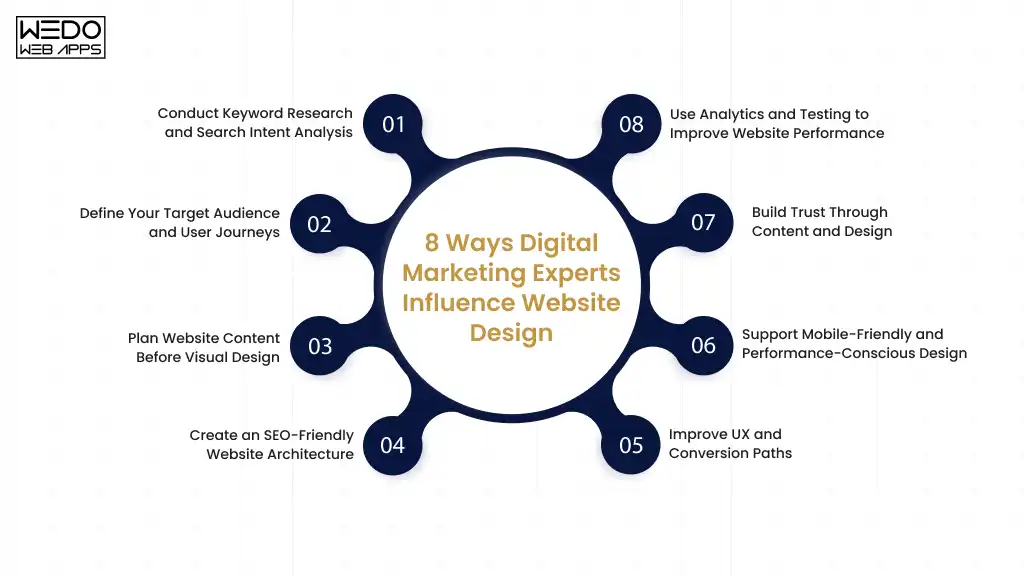
Digital Marketing experts influence website design long before the first page is visually designed. Their research helps determine what your website should say, how it should be structured, and how visitors should move through it.
Here are eight key areas where marketing expertise can shape better website decisions.
1. Conduct Keyword Research and Search Intent Analysis
Keyword research identifies the terms your potential customers use when searching for products or services. But targeting keywords alone is not enough.
Digital Marketers also analyze search intent to understand what users expect from a page. This can influence:
- Which services deserve dedicated pages
- What questions content should answer
- How page titles and headings are structured
- Which pages should target informational or commercial searches
For example, someone searching for “Magento development services UK” has different expectations from someone searching for “what is Magento”.
2. Define Your Target Audience and User Journeys
Your website should reflect how your customers actually make decisions.
Digital Marketers can identify audience segments, their needs, common questions, and potential barriers to conversion. These insights help designers create relevant journeys from the first visit to the desired action.
A B2B technology website, for instance, may need separate journeys for business owners, technical decision-makers, and procurement teams.
3. Plan Website Content Before Visual Design
Designing empty pages and trying to fit content into them later can create unnecessary limitations.
Marketing teams can establish the content requirements before development begins. This includes service information, headlines, supporting copy, FAQs, trust signals, case studies, and calls to action.
Designers can then create layouts around real content requirements rather than placeholder text.
4. Create an SEO-Friendly Website Architecture
Website architecture determines how pages are organised and connected.
Digital marketing experts can work with designers and developers to create a logical hierarchy that makes important pages easier for users and search engines to discover.
A well-planned structure can also support:
- Clear navigation
- Relevant internal linking
- Better content organisation
- Easier website expansion
This becomes particularly important for larger websites with multiple services, locations, or content categories.
5. Improve UX and Conversion Paths
Getting visitors to your website is only part of the job. Your design should also make it easy for them to understand what you offer and decide what to do next.
Marketing insights can help identify where users may encounter friction. Designers can respond with clearer navigation, stronger messaging, simpler forms, prominent calls to action, and better page layouts.
The goal is not to add more conversion elements everywhere. It is to make the next relevant action obvious.
6. Support Mobile-Friendly and Performance-Conscious Design
A website needs to work effectively across different screen sizes and devices. Marketing teams can use performance and engagement data to identify potential usability issues, while designers and developers can address them through responsive layouts and efficient implementation.
This can involve optimising images, reducing unnecessary page elements, improving loading performance, and ensuring important content and actions remain accessible on smaller screens.
7. Build Trust Through Content and Design
Visitors often evaluate your credibility before contacting or purchasing from you.
Digital marketing experts can identify the information customers need to feel confident about taking the next step. Website design can then give these elements appropriate visibility.
Depending on your business, this may include:
- Client testimonials
- Case studies
- Reviews
- Industry experience
- Certifications
- Security information
- Clear contact details
Trust should be supported by genuine evidence rather than decorative design alone.
8. Use Analytics and Testing to Improve Website Performance
Website design should not be considered finished once the site goes live.
Digital marketers can analyse organic traffic, engagement, conversions, landing page performance, and other relevant metrics to identify areas for improvement. Testing can then help determine whether changes to content, layout, navigation, or calls to action improve the user journey.
This creates an ongoing process of measure, learn, improve, and repeat rather than relying entirely on assumptions made during the initial design phase.

How SEO Shapes Website Structure and Navigation
A website’s structure affects howeasily visitors and search engines discover your important
pages. When SEO is considered during design, your website can provide clearer navigation while supporting organic search visibility.
Digital marketing experts collaborate with designers and developers to build a structure that supports both user expectations and search engine requirements.
Build a Logical Website Hierarchy
Organise your website into clear categories based on your service, products, and audience needs. Important pages should be accessible through simple navigation rather than buried several clicks deep.
For example, a web development company may organise its website into:
Home -> Services -> Web Development -> Custom Web Development
This structure helps visitors understand where they are and explore related services more easily.
Use Headings and Internal Links Strategically
Each page should have a clear heading structure that explains its main topic. Relevant internal links can connect related services, blogs, and supporting resources.
For example, a blog about eCommerce development can link naturally to your Magento, WooCommerce, or BigCommerce service pages. This supports navigation and helps visitors discover relevant information.
Consider Technical SEO During Development
SEO should be included before the website launches. Your team should consider:
- Mobile responsiveness
- Page loading performance
- Crawalable navigation
- Descriptive URLs
- Image Optimisation
- Canonical tags where required
- XML sitemaps
- Proper redirects during migration
The objective is to create a website that is easy to navigate, understand, and maintain while supporting your broader digital marketing strategy.
How Content Strategy Influences Website Layout
Your website layout should give visitors the information they need without making them search through unnecessary content. A strong content strategy helps designers organise information around user intent, business goals, and conversion opportunities.
Match Content With Visitor Search Intent
Different visitors need different types of information. Someone researching a service may need educational content, while a potential buyer may look for pricing details, expertise, or a consultation option.
Your content strategy should reflect these needs through relevant page sections, supporting resources, abd clear calls to action.
Design Around Real Content
Avoid designing every page around placeholder text. Plan important content elements before finalising the layout, including:
- Main headings and supporting copy
- Service descriptions
- Benefits and key differentiators
- FAQs and trust signals
- Forms and calls to action
This approach helps prevent crowded layouts and ensures the design supports the message.
Make Content Easy to Scan
Most visitors do not read every word on a webpage. Use short paragraphs, descriptive headings, bullet points, visual spacing, and meaningful callouts to improve readability.
Effective website content and design should work together to answer customer questions, communicate value, and guide visitors towards the next step.
How to Measure Website Design Performance
A website’s success should be measured through more than its visual appearance. You need to understand whether your design attracts the right audience, supports engagement, and contributes to business goals.
Digital marketing experts use performance data to identify what works and where improvements are needed.
Measure Visibility and Search Performance
Track how effectively your website appears in relevant search results. Important metrics include:
- Organic traffic
- Keyword rankings
- Search impressions
- Click-through rate
- Indexed pages
These insights help you understand whether your website structure and content support your SEO strategy.
Measure Engagement and Conversions
Visitor behaviour can reveal potential usability problems. Monitor metrics such as engagement rate, landing page performance, form submissions, and conversion rate to identify areas that need attention.
For example, high traffic with few enquiries may indicate unclear messaging, weak calls to action, or friction in the conversion process.
Connect Metrics With Business Outcomes
Choose metrics that reflect your actual objectives. A service-based business may focus on qualified enquiries, while an eCommerce website may prioritise purchases and revenue.
Regular performance analysis helps you make evidence-based design improvements instead of relying only on assumptions or visual preferences.

Common Mistakes Businesses Should Avoid
Even a professionally designed website can underperform when important marketing considerations are overlooked. Avoiding these common mistakes helps you build a website that supports both user needs and business growth.
1. Designing Before Defining Objectives
Starting with colours, layouts, and visual elements without clear goals can lead to an unfocused website. Establish your target audience, business objectives, and conversion goals before beginning the design process.
2. Treating SEO as a Post-Launch Task
Adding SEO after development may require changes to page structures, content, URLs, and navigation. Include keyword research and technical SEO requirements during the planning stage.
3. Prioritising Appearance Over Usability
A visually impressive website may still frustrate visitors if navigation is confusing or important information is difficult to find. Balance creative design with accessibility, readability, and ease of use.
4. Using Generic Content and Weak Messaging
Unclear or repetitive content makes it harder for visitors to understand your value. Create specific messaging that addresses customer needs and differentiates your business.
5. Launching Without Measurement
Without analytics and conversion tracking, you cannot reliably evaluate website performance. Set up relevant measurement tools before launch.
6. Ignoring Ongoing Optimisation
Customer expectations, search behaviour, and business goals change over time. Review website performance regularly and improve content, usability, and conversion paths based on reliable data.
How to Integrate Digital Marketing Into Your Website Project
Integrating digital marketing from the beginning helps your team make better design decisions and reduce changes after launch. Follow a structured process that brings marketers, designers, developers, and business stakeholders together.
1. Define Your Goals and Target Audience
Identify your business objectives, ideal customers, key services, and desired conversions before planning the website.
2. Research Keywords and Competitors
Analyse relevant search terms, competitor websites, customer questions, and content gaps to identify opportunities.
3. Plan Website Architecture and Content
Create the sitemap, navigation structure, page requirements, headings, and content priorities before finalising visual designs.
4. Collaborate on UX and Visual Design
Marketing experts and designers should work together to develop clear layouts, user journeys, messaging, and conversion paths.
5. Develop and Test the Website
Check responsiveness, accessibility, page performance, forms, navigation, tracking, and essential SEO elements across devices.
6. Launch, Monitor, and Improve
Review website performance after launch using analytics, search data, and conversion metrics. Use these insights to make ongoing improvements.
A collaborative approach ensures your website is not only visually effective but also prepared to support long-term digital marketing activities.
Conclusion: Build a Website That Supports Your Marketing Goals
Your website should do more than represent your brand. It should attract relevant visitors, communicate your value, and guide potential customers towards meaningful actions.
Integrating digital marketing into website design helps you make informed decisions about SEO, content, navigation, user experience, and conversion optimisation. It also creates a foundation for continuous improvement as your business and customer expectations evolve.
Whether you need a new website or want to improve an existing one, working with experienced marketing, design, and development professionals can help you build a more effective digital presence.